Summer in Japan: The Hokkaido Edition
Letters from Japan, July 2026: A summer trip to Daisetsuzan National Park in Hokkaido, and an ode to timeless landscapes.
Good afternoon,
It is peak season in Tokyo for lotus flowers, which you can find in abundance in Shinobazu Pond in Ueno if you visit before 9 a.m., and heat-induced trauma, which, more selfless than the lotus, will find you as soon as you step out the door.
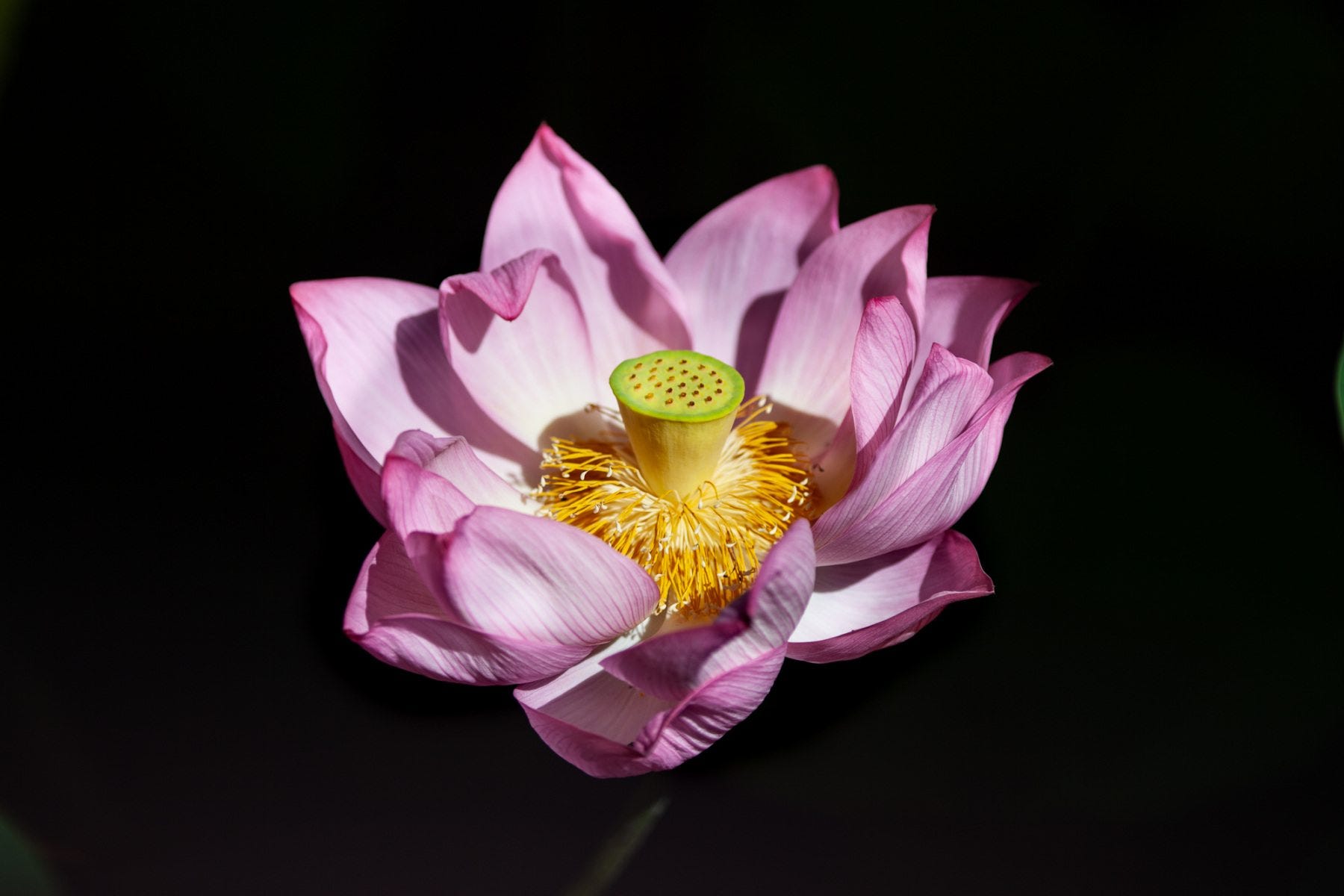
Summers in Tokyo are challenging for sure, but if I had to say a nice thing or two, I would this year, other than the lotus - the surreal beauty of which might be the most convincing argument for some divine power up there - choose Hiroshi Sugimoto’s Extinction exhibition at the National Museum of Modern Art.
Featuring more than sixty photographs by one of Japan’s most renowned photographers, it is the most inspiring exhibition I have seen this year.
One of the recurring questions Sugimoto explores through his work is whether it is still possible to see the physical world around us as our primitive ancestors did - a question that is at the heart of his best-known photographic series, Seascapes - also part of the current Extinction exhibition.
The series brings together photos of bodies of water across the world shot over the last four decades using the same composition of the motionless sea, sky, and horizon, isolated from all objects and other contextual references. It is a deceptively plain composition, even bordering on cliché, but that is exactly the point.
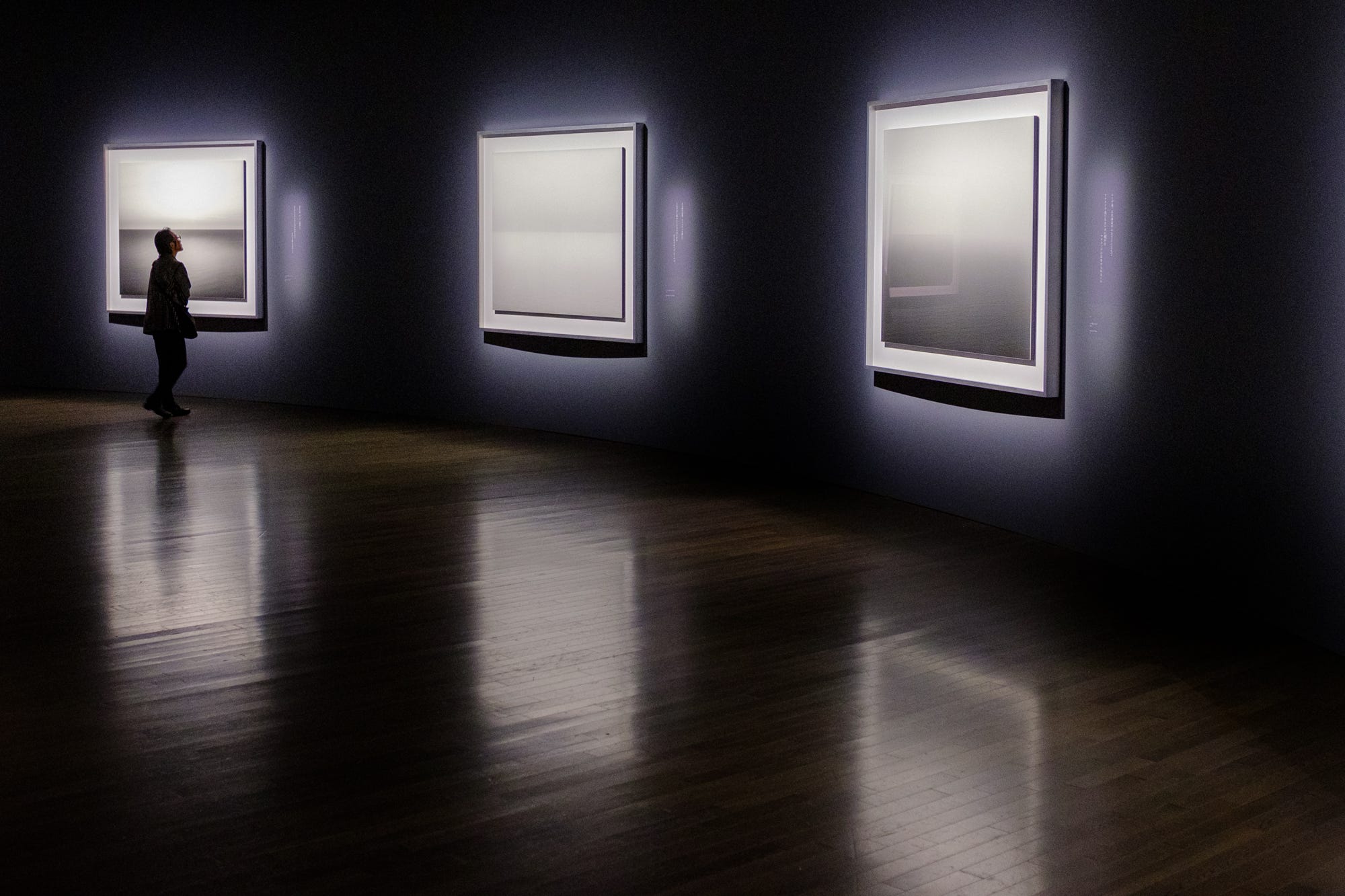
In his search for a visual experience shared across time, Sugimoto focuses on what he describes as “the most unchanged scene on the surface of the earth”. He reminds us that when we look at the sea, with everything else stripped away, we are looking at the same thing the earliest humans once did, and notes the sense of deeper belonging that visual connection brings:
“Mystery of mysteries, water and air are right there before us in the sea. Every time I view the sea, I feel a calming sense of security, as if visiting my ancestral home; I embark on a voyage of seeing.”
Since I first came across Sugimoto’s work more than a decade ago, I have been captivated, but more importantly comforted, by the idea of “ancestral home”, the calming sense of security it brings, and its exploration through isolated landscapes.
It is a simple yet deeply poetic way to think about the grip of remoter and wilder landscapes. Without the cultural and temporal context that the signs of civilization inevitably add to the experience, the instinctive connection between ourselves and the physical world becomes a little more evident; so does the broader sense of “home” that comes with it.
And this month’s letter is about that one place in Japan, with its vastness and wilderness, that I believe magnificently delivers on all of the sentiments I very pretentiously described above: Daisetsuzan in Hokkaido.
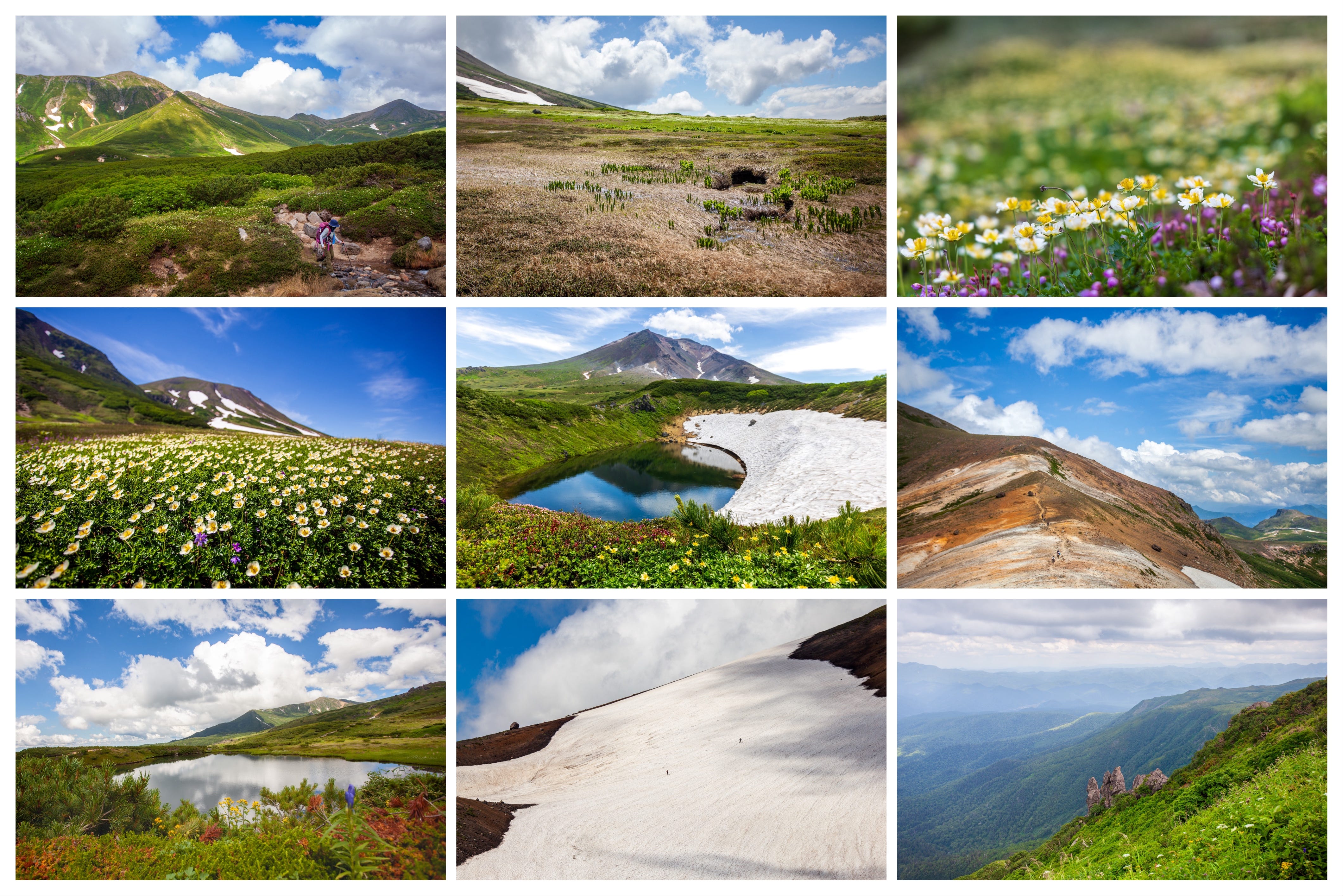
I have been feeling a little possessed by Japan’s largest national park, fittingly known as the Playground of Gods, since I first visited about five years ago, and have returned whenever I could, most recently just last week.
In this country, where nature and culture are so deeply intertwined, landscapes are rarely experienced in isolation from their cultural and historical context. There is almost always something to remind us where we are, whether it be a shrine, a torii gate that marks the entry to the sacred territory, or a small jizo statue that is there to protect us as it did the pilgrims of ancient times. And that, in many ways, is what sets the hiking experience in Japan apart. It is its greatest appeal.
But then there is also, at least for me lately, the increasingly strong pull of a wilder, less mediated, less defined experience - without the vocabulary or the frames to tame it. And in Japan, Daisetsuzan, which feels significantly wilder and untameable, is the one place where nature, in all its majesty, pushes all those interpretive tools away and becomes the defining experience.
Sure, Daisetsuzan is, on paper, not some obscure, hidden place, and I have no intention to pretend otherwise. With ropeway lines connecting it to the two onsen towns on its southern and northern sides, it is in fact one of the most accessible outdoor spaces in Japan. But with its enormous terrain, spanning more than 2,200 square kilometers, encompassing nearly 20 major peaks, three active volcanoes, wetlands, rocky ridgelines, its pull lies in its endless layers.
Visits usually start at the Sugatami Station area, which on a sunny day feels like a well-curated garden, which also happens to be home to an active volcano.
It is here you will find the twin ponds, otherwise known as husband and wife, perhaps reflecting our desire to over-humanize all our natural wonders and make it all about ourselves.
On clear days, with the silhouette of the “handsomely” shaped Asahidake reflected on both ponds - the entire scene perfectly fits the dictionary definition of postcard-perfect imagery. While I cannot vouch for this section’s power to take you to the ancestral home, I can definitely attest to its beauty.
But once you start wandering just a little further, the feeling of a garden will quickly disappear, and those layers will start to unfold, one on top of another. At times, it will no longer feel conventionally beautiful, quite the opposite actually, but what you lose in terms of postcard-perfect beauty is quickly replaced by the grandeur that comes with the increasing complexity of the terrain, both in texture and the effort it requires.
If you take the right turn and tackle the steep and slippery route up to Asahidake, Hokkaido's tallest mountain, the steaming volcanic vents will accompany you for a little while, reminding you that you are in dangerous terrain, trying to climb an active volcano.
Once you reach the top, you will likely be surprised by how different the weather can feel up there from where you started. The sudden cloud blanket is very common, but so is the sun that comes right after it. If you wait a little while, the clouds will likely, albeit often briefly, give way to clear skies - showing you the vastness that lies beyond.
But if you take the left turn and follow the narrow path that circles the ponds, the landscape will feel much more intimate at first. You will be walking through narrow corridors of dwarf-pine, with no sign of the open valley that lies ahead.
This is where you may want to pray that the Gods are, in fact, really playing around, and that they will make sure it is not your day to meet the real residents of Daisetsuzan: the brown bears. But, as someone who is more than a scaredy-cat - who is, in fact, even scared of cats - my willingness to push through these dense sections, which require significantly more mental stamina than physical effort, may serve as a testament to the allure of what lies ahead (if not to my carelessness).
Once you leave the pine corridor behind, a river crossing will put you on a path that will slowly get you a little higher up, with year-round snow patches all around, and you will soon find yourself out in the open. Depending on the weather, Susoaidaira Valley that you are now in will either feel like the most hostile terrain you have ever encountered, or the most captivatingly inviting one.
Come July, on a sunny day, the latter will far more likely be the case as the whole area bursts with color, with the carpets of alpine flowers toning down the imposing facade of the snow-patched mountain ridges surrounding it.
With no signs of mountain huts, shrines, torii gates or abandoned concrete structures, which tend to appear out of nowhere in Japan, this is where Daisetsuzan starts to feel much wilder but also deceivingly approachable. It lets you experience the landscape at a scale that moves you beyond the cultural boundaries of the country it sits in. It feels like planet Earth, not necessarily Japan.
Push a little further, and you will reach the wild hot springs where you can take a rest before the short but steep climb to the ridgeline above.
You will then soon be negotiating rocky ridgelines, with a poisonous caldera on one side and snowy descents to follow - all adding intense texture to the landscape without making you lose the sense of its vastness and the majesty that comes with it.
From there, you will descend onto a broad alpine plateau, with a few more hours of walking ahead, leading to the junction where a mountain hut awaits, offering a cup of coffee before the short climb to Kurodake, the northern edge of Daisetsuzan.
Once you reach the summit, there is little sign of the onsen town waiting below in the valley. Another hour of descent (one that somehow always feels much longer than it is) still awaits before the ropeway takes you back down to civilization and the whole package that comes with it: onsen, ryokan, yes, even a shrine.
But before all that waits down in the valley, Daisetsuzan has one last surprise in store. After all the volcanic ridgelines, snow patches and barren slopes, the landscape suddenly gives way to green hillsides that would not feel out of place in the Scottish Highlands - adding one more layer to all that came before.
Not sure if this hike will take you anywhere closer to the ancestral home, but it certainly makes me forget, if only for a little while - for one whole day, to be more precise - the borders that usually define it.
As always, thank you for being here.
Until next month,
Burcu


