

Good morning,
It has been a typical January in Tokyo so far—noticeably cold but consistently sunny. We have seen at most two days of overcast skies and maybe one day of rain. It feels refreshing yet cozy, as long as the air conditioners are on.
Since the late December trip to Hokkaido, I have gladly embraced the delightfully mundane pleasures of daily life in Tokyo, which, in my case, include a 22-minute, uncrowded train ride to central Tokyo, followed by a 20-minute walk through the charming Yanaka neighborhood for a 10 a.m. start at work, and a 6 p.m. finish. There’s occasional socializing, weekends spent on various errands, some website maintenance and updates, newsletter drafting, Tokyo-focused grand plans rarely followed through, and a lot of energy—half the time in vain—spent trying to tip the scale in favor of reading in the eternal battle between screen time and book time.1
After the pleasantly slow January, February will be a bit busier, starting with a short work trip to Laos, during which my colleague and I will spend more time in the air and at airports than on the ground in Vientiane. But whether it’s for work or leisure, for two days or a month, I’m always happy to travel to Southeast Asia. The region’s distinct humidity greets you the moment you step off the plane, promising an experience—a feeling—that only Southeast Asia can deliver, and one that’s different for everyone. For me, it’s the sense that the world is an exciting place and the fleeting hope that maybe, just maybe, everything might be all right—if only for a moment. Wishful thinking, of course.
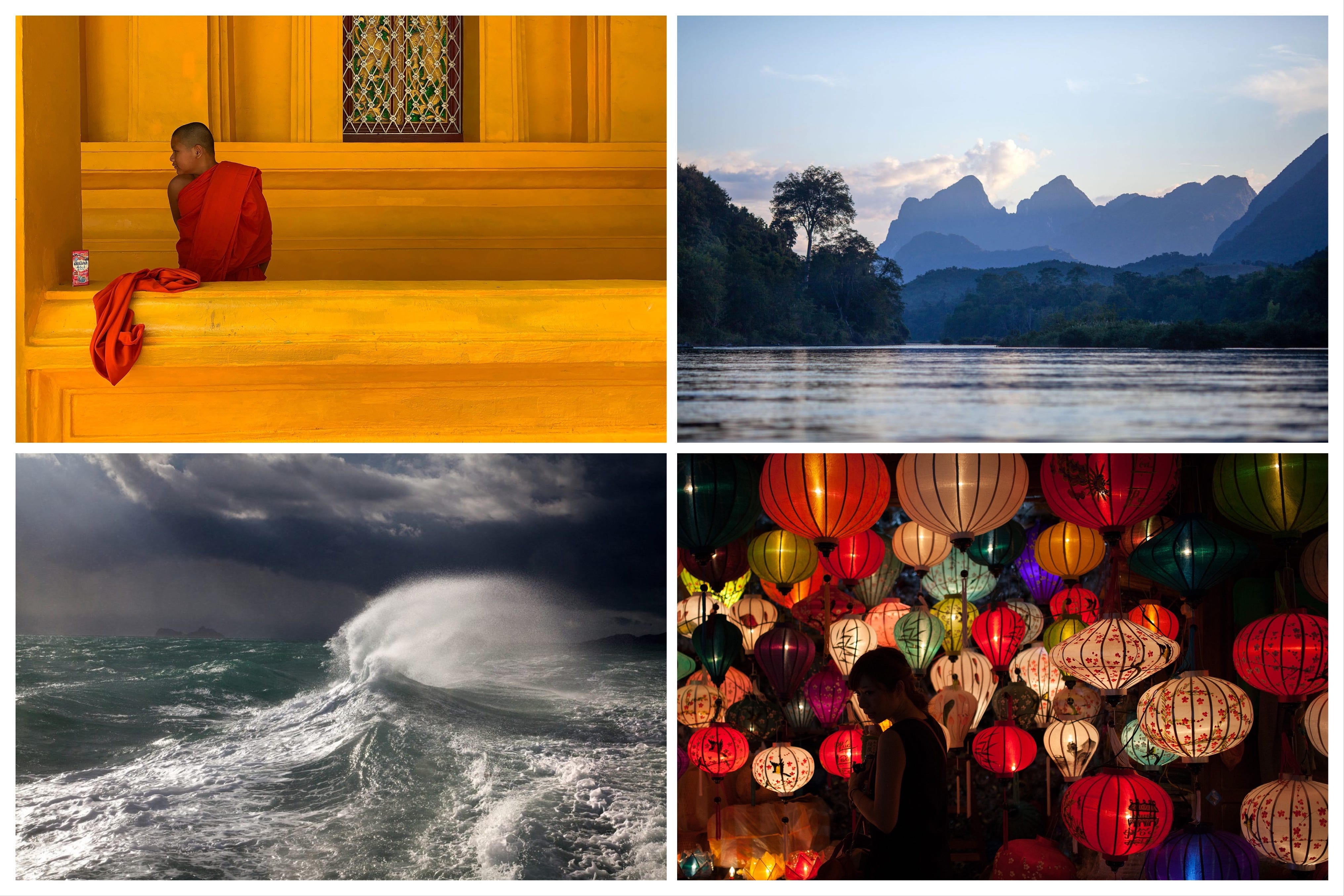
The brief visit to Laos will be followed by a much-anticipated week-long visit from my mother, which will include some Tokyo time as well as a side trip to the Kanazawa-Takayama region (the likely topic of the February edition of Letters from Japan).
The plum blossoms will then soon arrive, signaling the start of spring. The weather will gradually improve, reaching the perfect balance—not chilly anymore, but not yet hot—making it ideal for long walks and serving as my cue for travels to Kyushu, my favorite spring destination, much like Tohoku is reserved for autumn trips.
My first Kyushu outing this year will probably be at the end of February, taking advantage of the long weekend to visit Hirado Island. After visiting Nagasaki City, the Goto Islands, Amakusa, Ojika/Nozaki, Shimabara, and Unzen Onsen, all key locations in Japan's history as front-row witnesses to Japan’s first encounters with Western culture—Hirado Island, with many related sites, feels like a natural next step in this series of travels curated around that theme.
So, with a Kyushu map open on my desk, planning the Hirado trip, and eyeing Miyazaki Prefecture—which I’ve never visited—this month’s letter is about Japan’s southernmost main island, where the locals surely know how to have a good time.
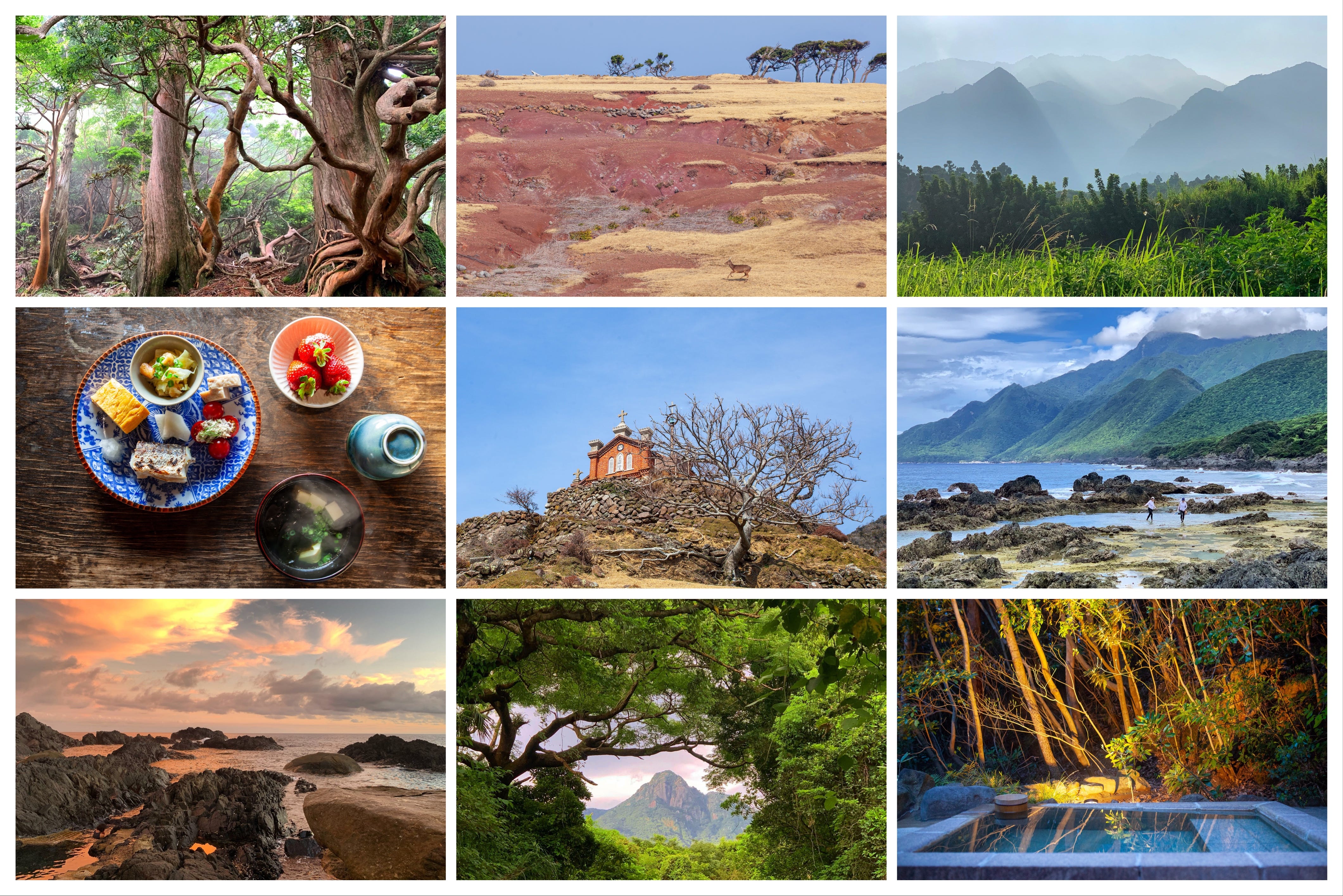
With its hiking trails, lively cities, historical sites, onsen towns, and islands, Kyushu offers countless sights and more than enough reasons to keep coming back. While I originally planned to cover all my favorite Kyushu destinations in this month’s letter, that quickly proved to be a not-so-good idea—better suited for a much longer post on my website. So instead—honoring the fact that my first visit to Kyushu wasn’t to its mainland but to one of its islands—this month’s letter is dedicated to three islands off Kyushu’s coast: one rightfully known as Japan’s hiking heaven, another as the 'island of prayers,' and the third, honestly, not known for much at all, which is part of its charm.
Wishing for a rainy day—Yakushima
My first encounter with Kyushu dates back to 2018, before I moved to Japan, when I visited Yakushima—a heart-shaped island surrounded by a 100-kilometer-long ring road, located 60 kilometers off the coast of Kagoshima, the southernmost prefecture in Kyushu.
It wasn’t a love-at-first-sight kind of story, but one that began with a naively unexpected feeling of disappointment—the sight of concrete and oddly painted buildings lining the coast of Miyanoura, the island’s largest town. Little did I know then that such scenery is typical of rural Japan, where beauty doesn’t always come easily or picture-perfectly — sweeping you off your feet at first sight — unless you deliberately look for it and, in most cases, work for it.
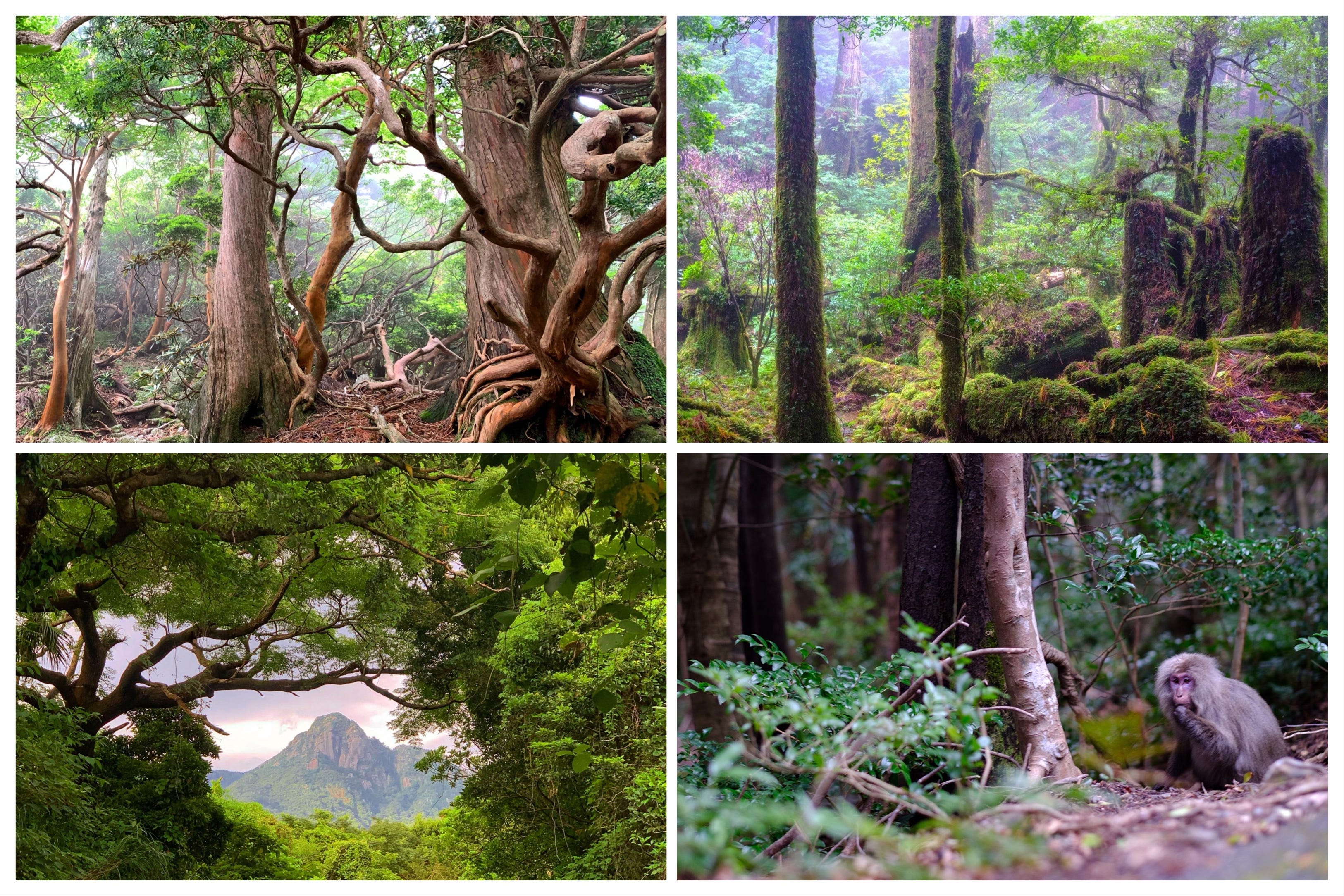
Luckily, in the case of Yakushima, the effort required was relatively minor: a short drive out of town and up to the higher elevations, followed by a mildly demanding hike to discover the awe-striking beauty, which was reportedly the inspiration for Hayao Miyazaki’s Princess Mononoke — and the ecological uniqueness,2 which earned Yakushima the honor of becoming Japan’s first UNESCO Natural Heritage Site in 1993.3
I have since visited Yakushima two more times, each for an extended stay. While I would recommend Okinawa for swimming (though Yakushima has beaches, they don't quite compare to Okinawa's), when it comes to hiking, not much can beat Yakushima. Despite spending months on the island, I barely scratched the surface of its hundreds of hiking trails.
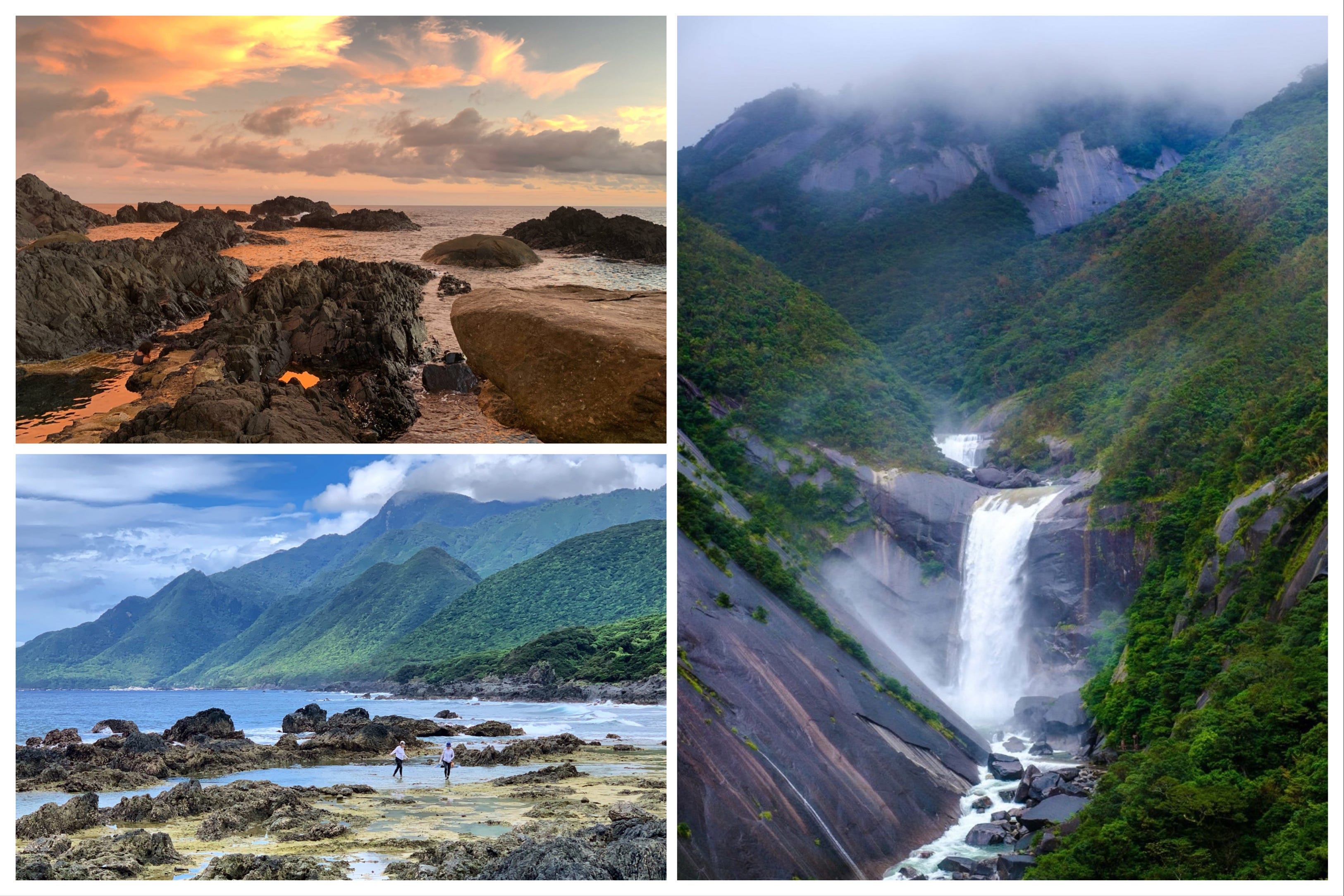
Thanks to sites and hikes like the Moss Forest in Shiratani Unsuikyo, reportedly the exact location that inspired Miyazaki, Miyanoura Dake, the highest peak in Kyushu, and the Jomon Sugi, Japan’s oldest tree, estimated to be between 2,000 and 7,200 years old, Yakushima is certainly not desperate for visitors. In a country where travel decisions are often guided by landmark lists, the 10-hour Jomon Sugi trek, in particular, feels like a pilgrimage for Japanese visitors, who, I believe, can receive a completion certificate at the end of the trail.
As a stand-alone hike, the Jomon Sugi trek isn’t my favorite on the island, though the giant cedar tree is truly impressive. If you have the time, a two-day trek called the island traverse (not as intimidating, challenging, or technical as it sounds) that also covers the Jomon Sugi is a great way to explore some of Yakushima's most spectacular scenery.
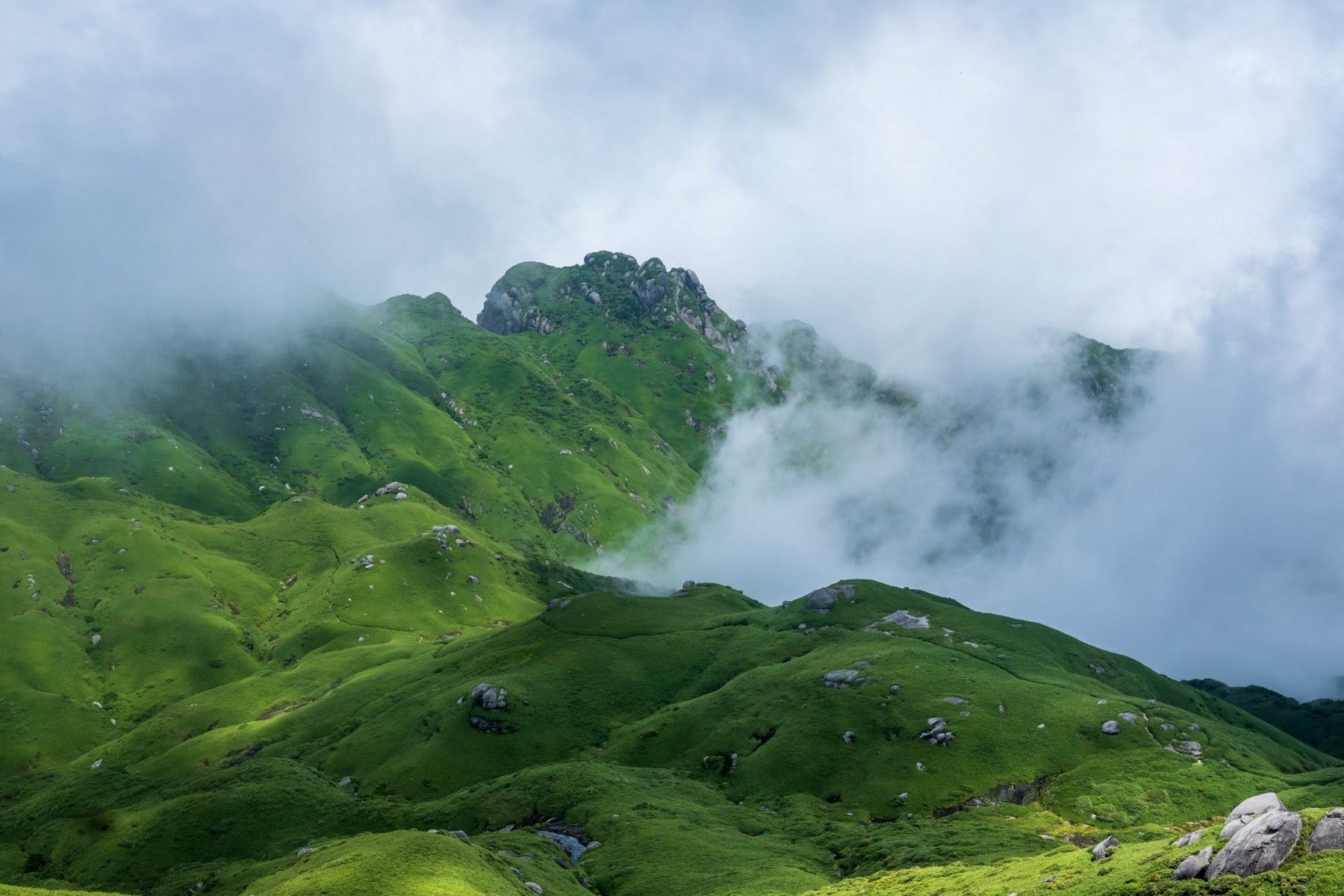
The traverse route, which typically starts at the Yodagawa Trailhead (though there are other options), begins with a hike up to Miyanoura Dake. It includes an overnight stay at one of the mountain huts, followed by a descent to Jomon Sugi through one of the most intriguing, spookily beautiful, and memorable forest sections I’ve experienced. The trail offers a constantly shifting landscape, with ancient forests, intriguing rock formations like the affectionately named tofu rock, and monoliths that evoke Game of Thrones landscapes. This all takes place in the company of exceptionally shy yakushika—Yakushima deer—and far less shy island monkeys. It’s a hike I’ve done only once, but I would love to repeat it someday.
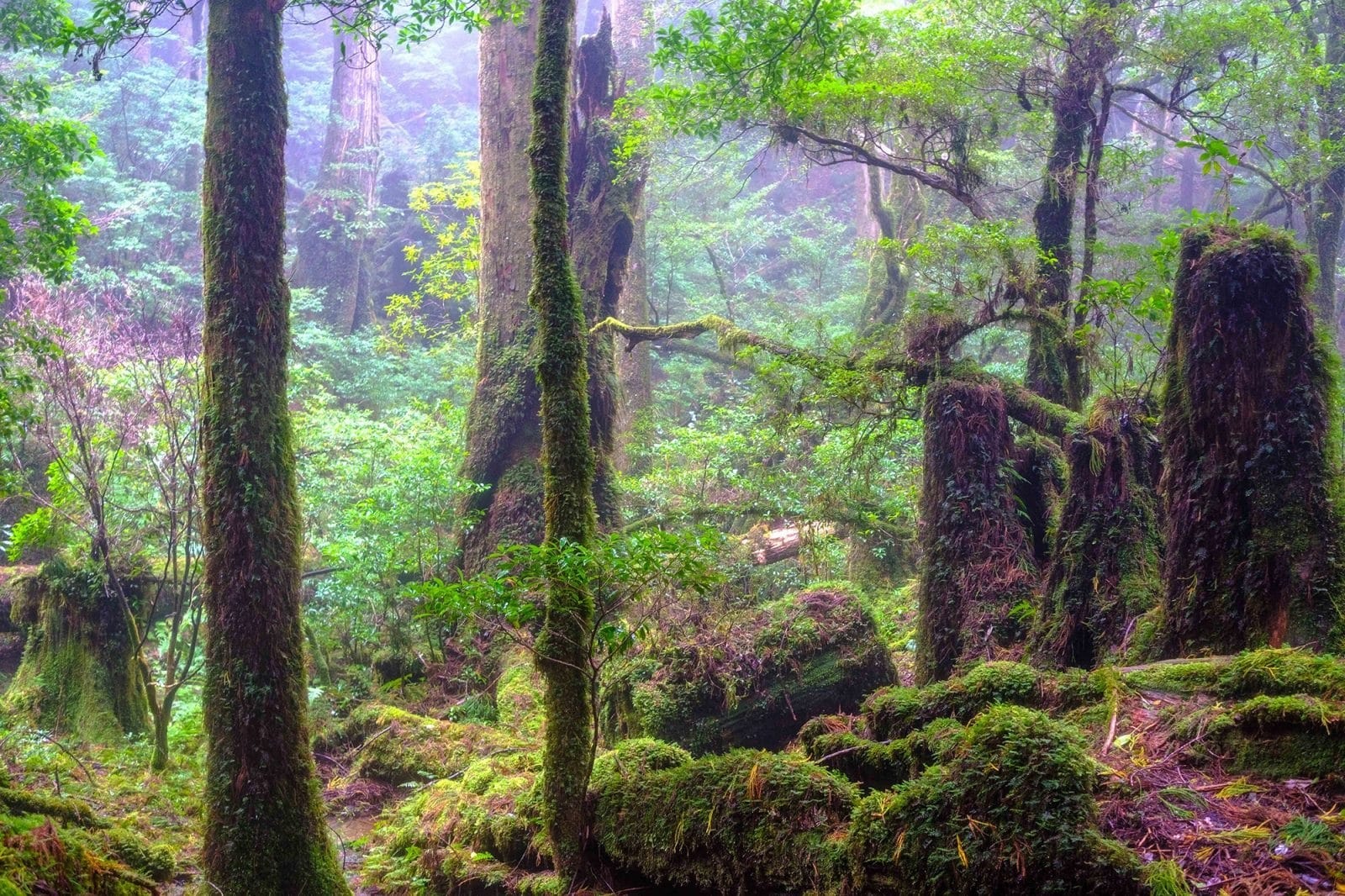
Marked as Japan’s wettest place—hence the saying “it rains 35 days a month in Yakushima”—4 you’re likely to encounter rain at least part of the way during your hike—and if you don’t, too bad. While it presents its own challenges, rain is something to wish for, as it truly elevates the experience, bringing out the vibrant green, making the moss shine, and allowing you to feel the power of an ancient forest deep in your bones.
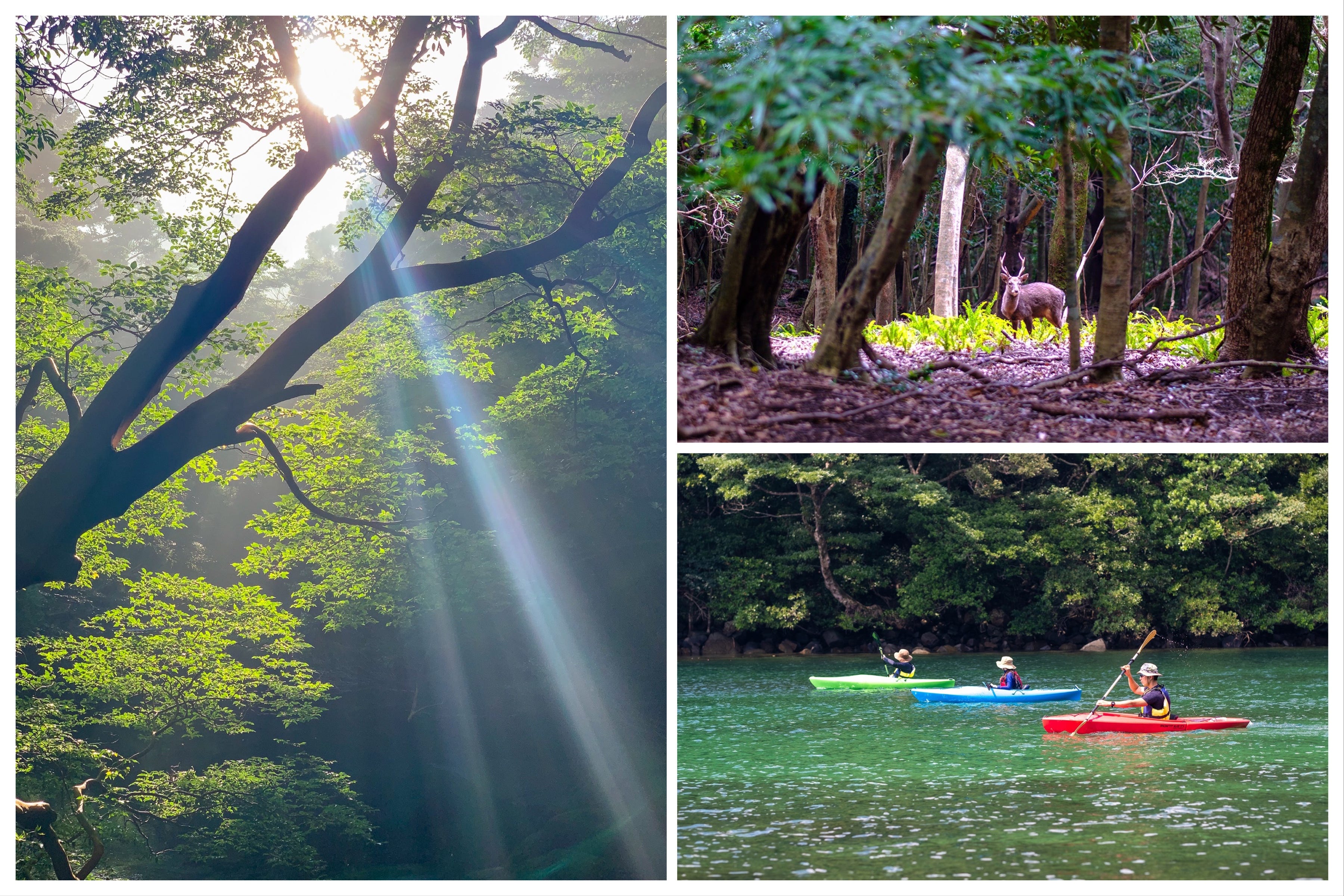
While I didn’t fully appreciate it during my first visit, as I had very little experience with rural Japan and how desolate it could feel, another essential aspect of Yakushima that makes it special is the range of additional opportunities it offers to complement the hiking experience and help you enjoy the island. In addition to scenic ocean-side onsen where the waves mix with (very) hot spring water, rivers to kayak, atmospheric eateries, and waterfalls (some flowing into the ocean), you might even get the chance to witness a rocket launch from nearby Tanegashima Island, home to a space center — if you're lucky. During a three-day walk around the island’s 100-km ring road, I was fortunate enough to experience both a rocket launch and a volcanic eruption in real time (with no fatalities) on the nearby Kuchinoerabu Island.
Amakusa, the islands of prayers
While Yakushima is possibly the best destination for hiking enthusiasts, the Amakusa Islands, off the coast of Kumamoto Prefecture, which I, a little unfairly, tend to overlook in favor of the Goto Islands, offer many historical sites in addition to “Olle trails”.