Good afternoon,
It is an ordinary late August day in Tokyo, with the exception of the unusually tolerable summer weather that I would rather not discuss any further, so as not to jinx it.
But I hope this relatively good weather will carry us all the way through autumn, the timing and meaning of which is a rather complex topic in Japan.
First, with the main school year and financial calendars following an April-to-March cycle, September doesn’t have the same fresh-start feel that it does in many other Northern Hemisphere countries.
The country’s tall and skinny geography also leaves little room for a collective sense of fall. Signs of the season show in the northern parts of Hokkaido as early as August, while its most beloved signifier, the colorful autumn leaves, does not reach cities like Tokyo and Kyoto until well into late November, and I am not sure if the season even makes an appearance further south in Okinawa.
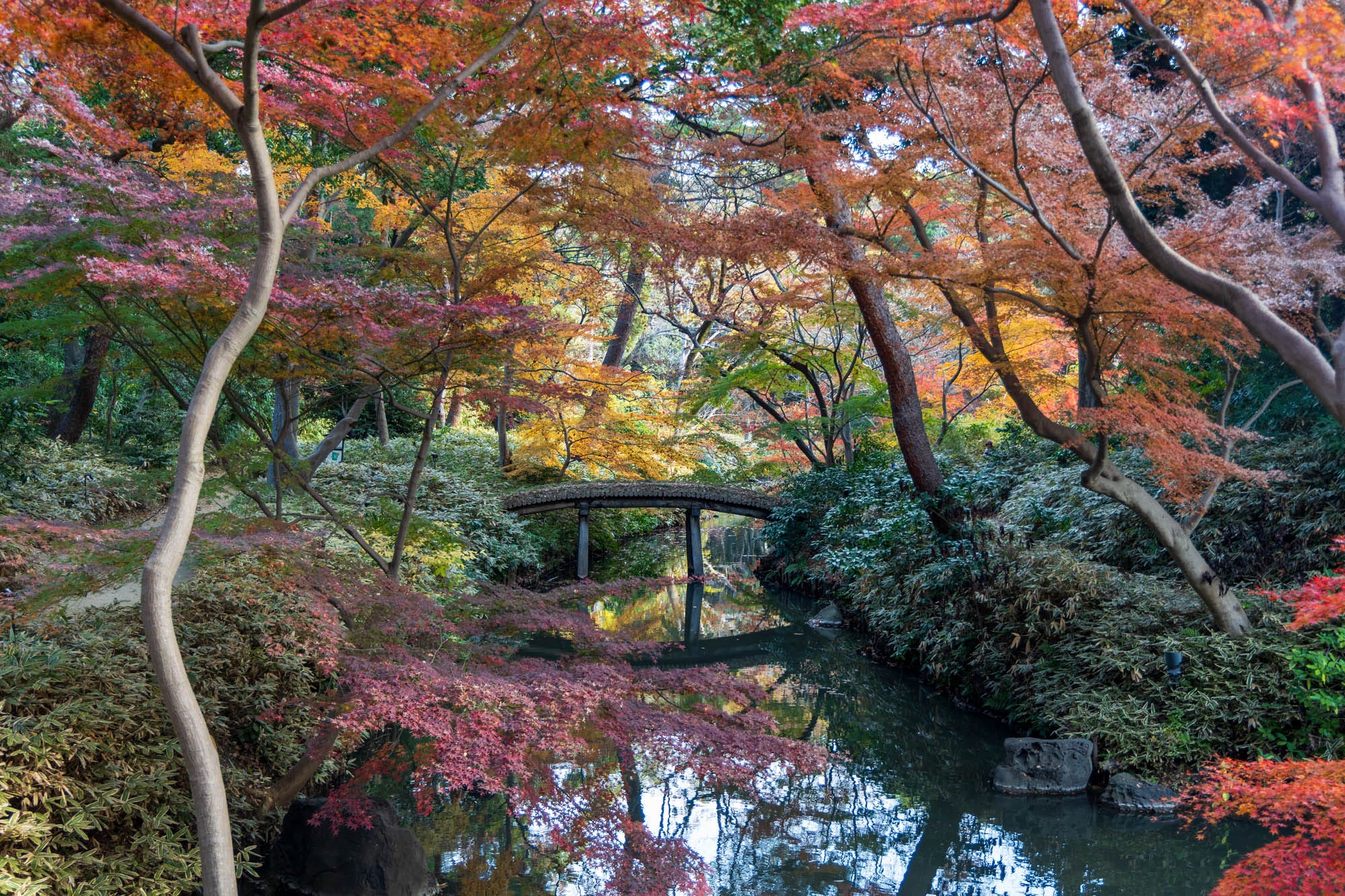
But this also means we get to have a delightfully long autumn colors season, with many destination options to experience the foliage between September and mid-December. And unlike the far more capricious sakura, which grace its hosts with only a week-long presence, the gradual transformation of the leaves that takes around three weeks means that even if your trip does not coincide with the absolute peak, you are still likely to catch some version of the spectacle.1
This, unsurprisingly, brings us to this month`s topic: some of my favorite foliage-viewing destinations in Japan, in chronological order from September to December.
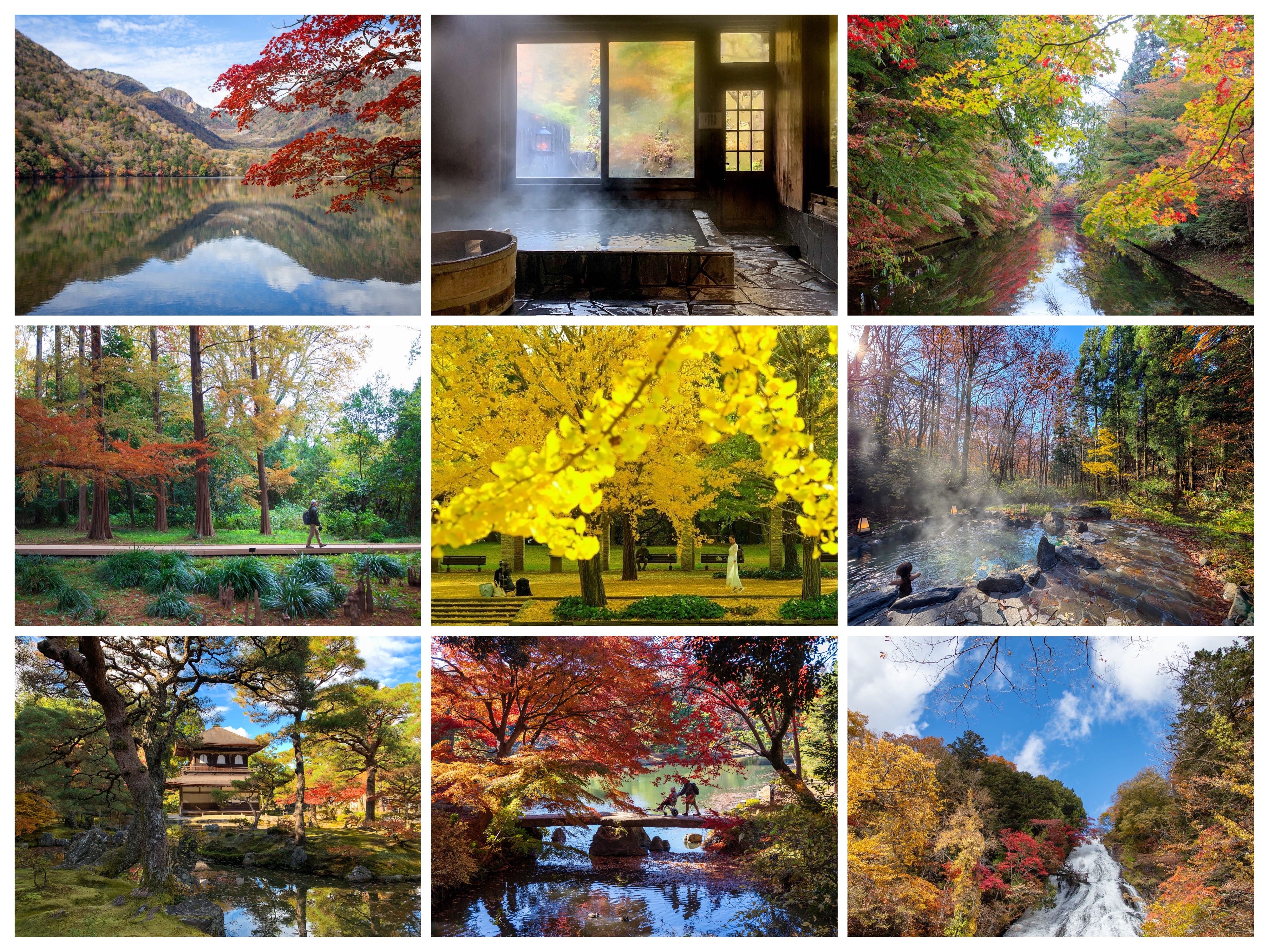
The tone of the letter will be similar to Hiking Japan and Reading Japan letters, covering multiple places around a single theme in a name-dropping style, with quick mentions of places and links to more detailed posts where available. That said, the geographical jumps will be a little more exhausting, with constant switches between north and south and high- and low-altitude destinations. As you will notice, the list below covers mainly the northern half of the country, as Kyushu and Shikoku, two regions I love, somehow tend to be spring trips for me.
So, here we go, starting where we actually left off last month.
One of the earliest places to see autumn colors in Japan is Daisetsuzan National Park in Hokkaido, which was also the topic of last month's letter.
Starting in mid-September, the entire area surrounding Hokkaido`s tallest peak, Asahidake, turns into an outdoor exhibit of every possible tone of foliage, offering one last spectacle, shortly after the wildflower season, before those beautiful ponds, pine alleys, and flower fields disappear beneath the snow, not to be seen again until May or June.
The easiest way to enjoy the autumn scenery is to take the ropeway connecting the Asahidake Onsen Village to the Asahidake trailhead, which offers a ten-minute ride with a bird's-eye view of the color fest below. Once on the ground, the 4-5 hour trek to the Susoaidaira Valley is worth the effort as the vividness of the foliage along the valley perfectly matches the diversity of the alpine plants it hosts, or that is what I hear.
Despite visiting the area numerous times, most recently last month, I personally never had the good fortune of seeing the autumn colors in Asahidake. The very low odds of good weather, a weekend, and peak colors all happening at the same time, along with a reasonable airfare, push the trip, possibly perpetually, onto my list of things to look forward to.
Another famous high altitude spot that greets the peak fall colors early in the season - shortly after Asahidake in late September - but without requiring the trip that far north, is in Kamikochi in Nagano.
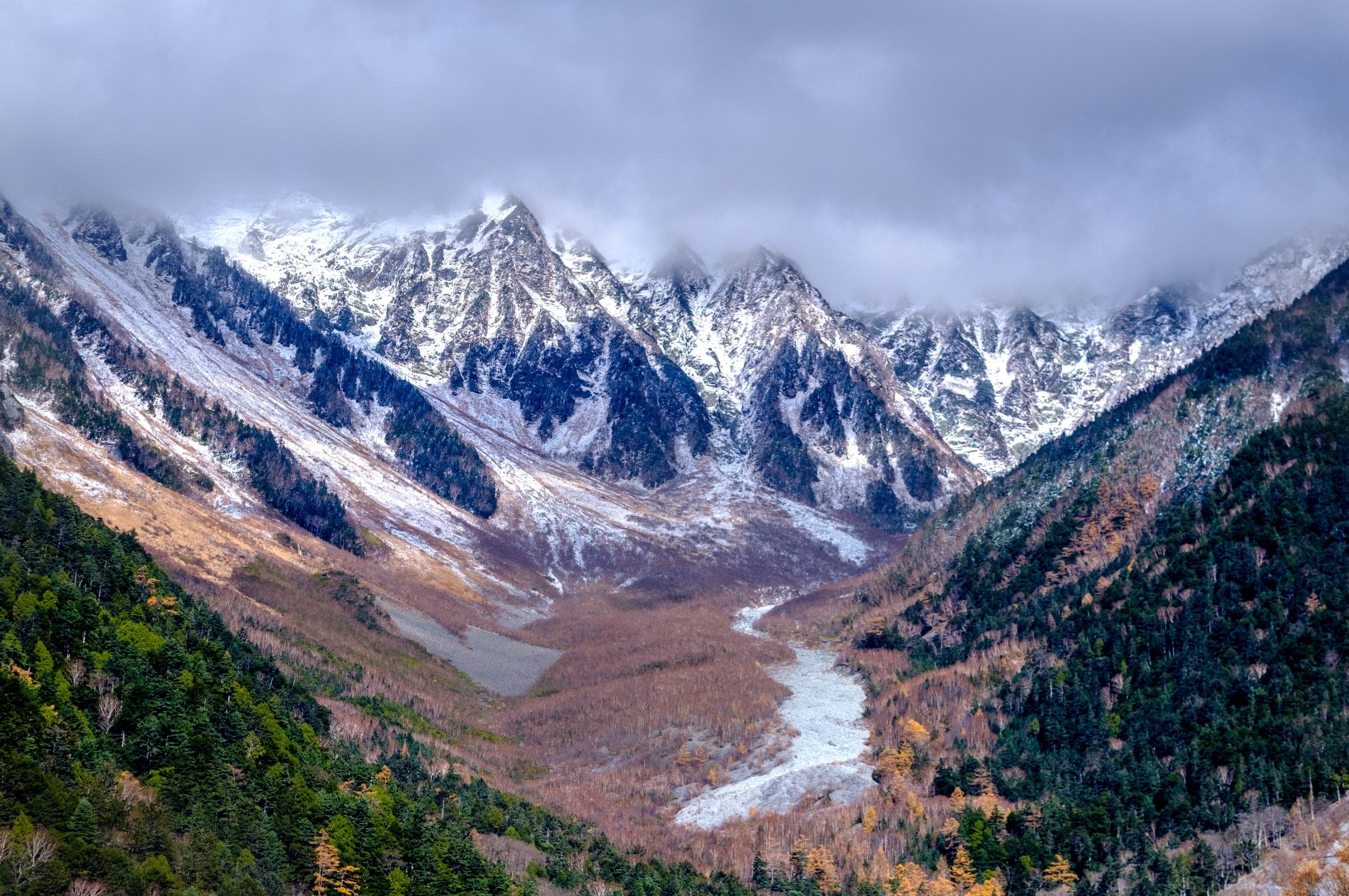
The Kamikochi Valley itself, known for the iconic view of Kappa Bridge with the Japanese Alps in the background, doesn’t see much color activity until at least mid-October. But Karasawa Cirque, just a steep hike above, reaches its peak foliage in late September. This bowl-shaped glacial valley, surrounded by rocky peaks and home to hair-raising trails, is perhaps the single most popular autumn color hike in the country.
Thousands of people make the five-hour trek in late September each year, either staying at one of two huts up in the valley or joining the campers in a setting that closely resembles the tent city of Everest Base Camp during the peak summit season.
Another option is to stay at Tokusawa Lodge the night before - the nicest mountain lodge I have stayed at in Japan - for an early start in the morning, though the concept of an “early start” to a hike in Japan may baffle many, when 4 a.m. is often considered to be late.
Karasawa is one of those places in Japan that feel a bit too clichéd until you actually visit, when it quickly moves into the file of clichés that are clichés for a very valid reason.
Come early October, the options start to increase. Two of my personal favorites reach their peak fall colors in quick succession around this time, the latter one fortunately also falling into a long weekend.
Murodo, in the Tateyama Mountain Range in Toyama Prefecture, which on paper looks close to Tokyo but requires a rather cumbersome trip involving four different modes of transportation, is one of the best places to enjoy the colors in an open, majestic mountain setting, where the display greatly benefits from the delightfully strange topography of the surrounding mountain range.
The open alpine plateau is home to several small ponds, along with a handful of decidedly not so good-looking huts, which fortunately feel much cozier when you walk inside.
Even a short walk down in the pond area is rewarding enough to make it onto anyone’s (certainly my) list of finest foliage memories, though a hike to higher altitudes, with the panoramic view down below, may put a tear of joy in your eye.
While Tateyama is usually good for trips during the first week of October, it takes another week for the ever-beloved Oku-Nikko region to reach its peak, making it a perfect destination for the Sports Day long weekend in mid-October.
With three waterfalls, including one of Japan's three most beautiful (this is certainly a list-loving country), two marshlands, two lakes, and small ponds in between, Oku-Nikko offers a much more intimate, all-encompassing fall colors experience.
With the risk of repeating myself, this is, without even a second thought, the one place in Japan that I would pick for foliage viewing if I were forced to choose just one.
The region has some sort of emotional grip on me. In a country of wild mountain peaks, exposed ridges, and vast alpine plateaus, it is the one place that allows you a deep forest walk, for hours and hours if you wish, and makes me embarrassingly sentimental every time I write about it.
Moving up north geographically, but losing a little bit of altitude, there is the Tohoku region - the rural heart of Japan with six wildly distinct prefectures. One could easily spend a month in Tohoku in autumn between early October and mid-November, without running out of places to visit for the peak fall colors.
Around mid-October, the Goshikinuma area in Fukushima Prefecture becomes the center of attention, at least for locals, if not as much for visitors. The main visual draw is around thirty ponds, which offer a color palette of all shades of blue and look particularly spectacular during the autumn foliage. Eight of these ponds can be explored on a physically easy but mentally taxing hike (with bear warning signs at every corner) of around five kilometers.
Jumping over Iwate and Yamagata Prefectures for a moment (but to revisit the latter on the way down to Tokyo) and moving to late October, we arrive at Akita Prefecture.
An autumn visit to the Nyuto/Kakunodate area of Akita Prefecture was my first introduction to Tohoku, which, as the number of relevant posts in the newsletter shows, got me completely hooked.2
Nyuto is where you can have one of the most rustic onsen-stay experiences in the country, surrounded by forests that still manage to look deliciously spooky even with all that color around. Just below is Kakunodate, a well-preserved but not-yet-too-spoiled Edo-era town, with a street lined with historic samurai houses, which becomes as colorful in autumn as in the cherry blossom season.
With a bit more time, Lake Tazawa (Japan's deepest lake, if you were wondering) or a short hike along the nearby Dakigaeri Gorge are two additional options, though I have to admit both can feel a little underwhelming after the intimately gorgeous beauty of the Nyuto area.
Just a little further north, and still in Tohoku, we reach Aomori Prefecture,3 where the lower-altitude areas are usually just a few days behind Nyuto in reaching peak foliage, making it a good spot for early November.
Here, a trip of four to five days will take you from historical cities to onsen towns, then through the Hakkoda Mountains, which by late October are usually already in a winter mood, before descending to a stream and finally a lake (which strangely does not have any list-related qualification), all in the company of the autumn colors.
This is another area, like Oku-Nikko, that I try to visit every autumn on the first weekend of November, taking advantage of the Culture Day national holiday. I usually start with an overnight stay in Aomori City, which offers the best connections to the wider region; then stop in Hirosaki; take a day trip to ridiculously colorful Nakano Momiji Mountain; stay overnight at my favorite onsen near Kuroishi; and usually finish with a short hike along Oirase Stream by Lake Towada (Japan`s third deepest, and its twelfth largest by surface area).
I love this trip because it includes a little bit of everything. Hirosaki is one of those mid-sized cities that, depending on the weather, can be very charming in its own subtle way, with a few substantial landmarks, including one of Japan’s twelve remaining original castle keeps and a never dissapointing contemporary art museum; the onsen stay is as authentic as it gets, in a setting with no electricity and only oil lamps; and the two hikes woven in between are picture-perfectly gorgeous, almost a little performatively so.
By early to mid November, just around the time the Uniqlo autumn jackets become the uniform in Tokyo, the autumn colors start to make their descent to the lower-altitude regions en masse, leaving you with too many choices, so it may be better to stick to Tohoku for a little longer.
Yamagata Prefecture may not ring a bell at first, but it’s home to heavyweight sights including Ginzan Onsen, one of the most popular cover girls of Japan tourism brochures, and Yamadera, the highly picturesque mountaintop temple that would possibly have been the location of choice if the movie version of Umberto Eco`s famous novel The Name of the Rose had been filmed in Japan instead of Europe.
On a trip for the Tohoku Tourism Office a few years ago, I stayed in Ginzan Onsen, visited Yamadera Temple on a day trip, and finished with a ride on a wooden boat along the Mogami River (Japan’s seventh-longest river, as you might be curious by now), immortalized by Japan’s great haiku master, Bashō, making it a neat little two- or three-day foliage trip.
In all honesty, the trip, as is understandably often the case with assignment trips, was a little too packed for me to really connect with each place, but I remember appreciating the diversity, hence its addition to this letter.
Before finishing this extended autumn-colors trip with a quick mountain hike followed by the country’s usual suspects for any trip, not just autumn, one last stop in Tohoku brings us back to Fukushima.
Nihonmatsu and Tsurugajo Castles, both important sites of the Boshin War that opened the way to the end of the samurai era, make perfect stops not just for their historical significance, but also for the beautiful parks that surround both, with an impressive display of fall colors in early November.
Further west, the Tadami River dominates the scenery, with the secluded Mugenkyo ravine, which you can explore on a small wooden boat, and the First Tadami River Bridge viewpoint, where “patient people” camp out for hours to wait for that perfect train over the bridge shot against the backdrop of autumn colors.
I remember my visit to this area, just a two-hour train ride from Tokyo, for giving me a refreshing image of Fukushima filled with vibrant towns, river valleys, castles, and the craftsmanship Tohoku is famous for, rather than one until then overwhelmingly defined by the events of March 2011.
While the first tentative signs of color change start appearing in our final stops of Tokyo, Kyoto, and Kanazawa in mid-November, Iiyama in Nagano, known more as a Shinkansen stop on the way to the ski and onsen resort of Nozawa Onsen than as a destination in its own right, is already experiencing autumn in full color.
It is a place I have been to only once for a night but felt compelled to mention in this letter, as it is the only place where I experienced the autumn colors in the company of a local yamabushi. The hike to Kosuge Shrine - through an ancient cedar forest - an area with a long history as a training ground for mountain ascetics, is one of those rare hikes in Japan where the effort feels too little for the reward, unless of course you are training to become a yamabushi.
It was visually and, if I may say so, even spiritually an almost overwhelmingly memorable experience - one of those trips where I was embarrassed by the number of my own shutter clicks, and I think the other hikers were equally embarrassed for me.
In late November, the mayhem descends upon Kyoto, Tokyo, and Kanazawa almost at the same time, creating an extremely first-world problem: which one to visit during the peak. Well, with the exception of Tokyo, I suppose, where I live. All three have been extensively covered in separate letters linked below, so I will keep the introductions brief here to avoid turning this into an overly long letter.
I once had the opportunity to spend ten days in Kanazawa at the peak of the fall colors almost accidentally (long but not an interesting story), and I can 100% recommend the city for autumn colors. It is home to Kenrokuen, one of Japan’s three most beautiful gardens, well, of course it is, and numerous smaller gardens and parks, along with the impressive D. T. Suzuki Museum and Museum of Contemporary Art; it is also a conveniently walkable city,4 just like our next stop.
The little-known city of Kyoto and its thousands of temples, many with gorgeous gardens, is a place I would admit to visiting again every year on the first weekend of December during peak colors if I weren’t worried about coming across as a habit-obsessed person (which I 100% am) after all the annually repeated trips mentioned above.5
Tokyo is another wonderful stop, perhaps not blessed with the temples of Kyoto but home to some of the finest gardens in Japan - Rikugien being a favorite - many of which are fortunately within walking distance of where I work.6 Strange to say so, but the capital feels a little forgotten and underrated when it comes to autumn foliage, overshadowed by the always-shiny little Kyoto - but it certainly shouldn’t be, says the person who leaves the city almost every year during peak fall colors to visit the old capital.
This brings us to the end of this month`s letter. I will be back next month, either a bit too early or a little late, to cover an upcoming hiking trip to that big beautiful country in Oceania.
But one more thing before I go: a rather boring update. As Google’s AI-generated search results continue to eat away at the traffic that once found its way to websites like mine, while increasingly making use of the content they find there, I have been thinking about the diminishing value of keeping the entire archive permanently open on the web.
So, starting with this letter, each monthly letter will stay freely available on the web until the next one arrives (and perpetually in your inbox), then move into the paywalled archive on the web. That’s really all that is changing. The more general web posts, Japan travel resources, and other content on the website (separate from the newsletter) will stay public as before. I tried to explain the new setup in a little more detail here: Letters from Japan Archive.
As always, thank you for being here and for your interest in the newsletter.
Until next month,
Burcu
A quick practical note: I usually rely on Japan Guide’s field reports and Kishou’s nationwide foliage forecasts to track the progress of the colors. The first reports generally start appearing in mid-to-late September. Japan Guide’s foliage reports cover around ten to twenty major foliage spots, with photos from each visit, while Kishou allows you to track the status of hundreds of locations, but without photos.
From the subscriber archive: Tohoku Onsen Hopping, a four-night, five-day autumn travel diary featuring stays at four different hot springs, including Nyuto Onsen.
From the subscriber archive: Blue Forests of Japan: Autumn Trip to Aomori, a detailed fall-colors itinerary covering major autumn foliage spots in Aomori Prefecture.
From the subscriber archive: One Fine Day in Kanazawa, a one-day walking itinerary covering all the city’s major stops.
From the subscriber archive: One Fine Autumn Day in Kyoto, a diary-style walking itinerary for a day in Kyoto during peak fall colors.
From the subscriber archive: One Fine Autumn Day in Tokyo, a one-day walking itinerary through some of the city’s finest gardens during peak fall colors.


These are such lovely recs! I will be in daisetzuan next week for 3 days (6-9), and Kamikochi on the 14-16 but would love to know what you recommend in the interim! I was looking at either rebun island or hakuba but I’m open to any recs :)
Beautiful vistas.