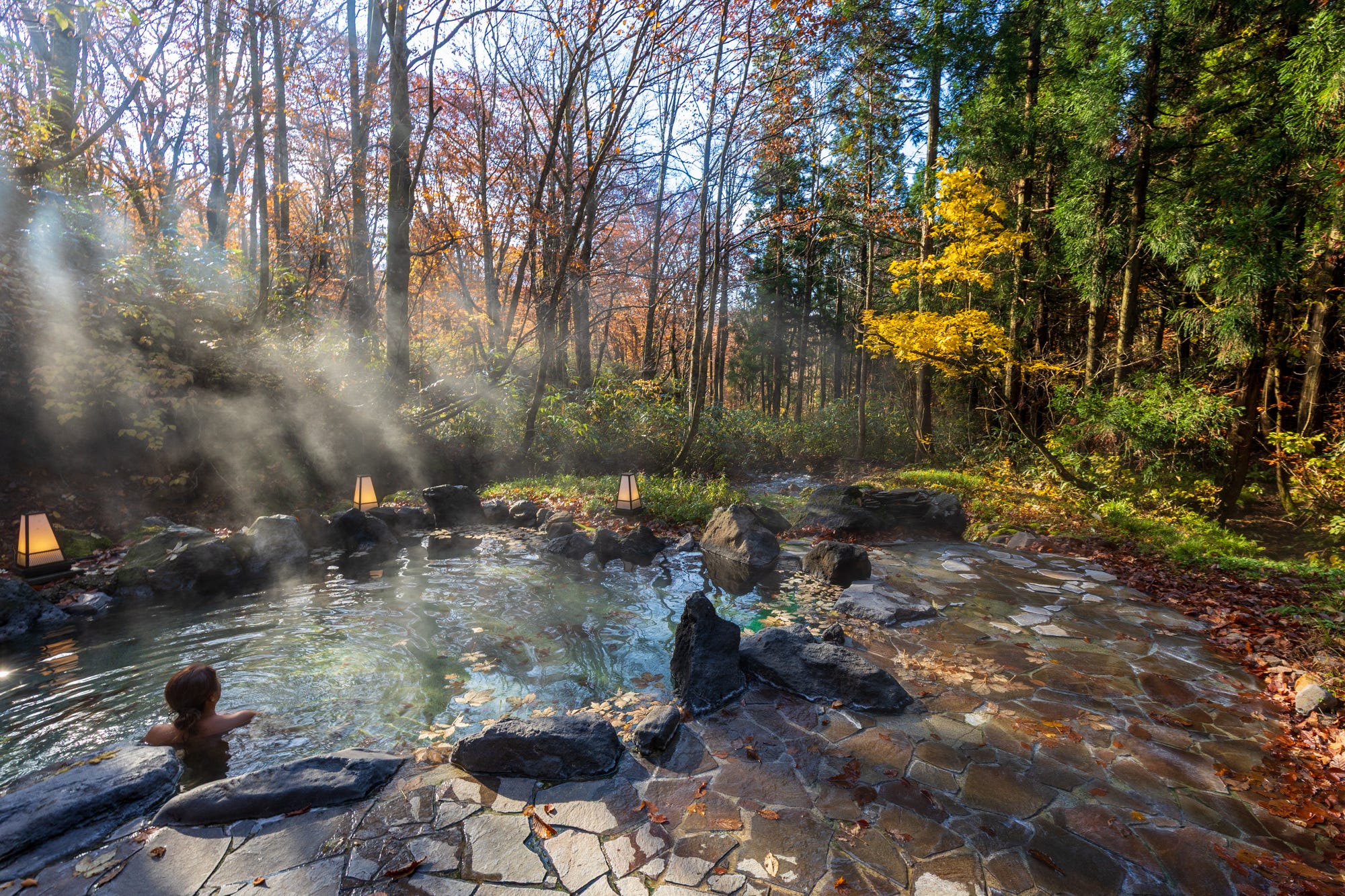
For the Love of Ritual: Onsen in Japan
Letters from Japan, March 2026: some of my favorite hot spring experiences in Japan.
Good afternoon,
Just a few days ago, snow was falling in Tokyo, possibly making the experts at the Japan Meteorological Agency rush back to their desks to update the sakura forecast. Only last week, the latest predictions had pointed to March 18th as the start of the season in Tokyo, earlier than usual. But after weeks of uninterrupted sunshine, mid-March has brought not only the expected moody, cloudy skies but also low single-digit temperatures, which may push the cherry blossoms well into April, as it did last year.
The sakura season and the rush it brings will soon be followed by Golden Week in early May, marking the country’s busiest period for domestic travel.
Things will then slow down a little, starting in June with the arrival of the rainy season, which will be despised at first but then dearly missed once the real summer begins, brutal in the cities but a little more tolerable up in the mountains.
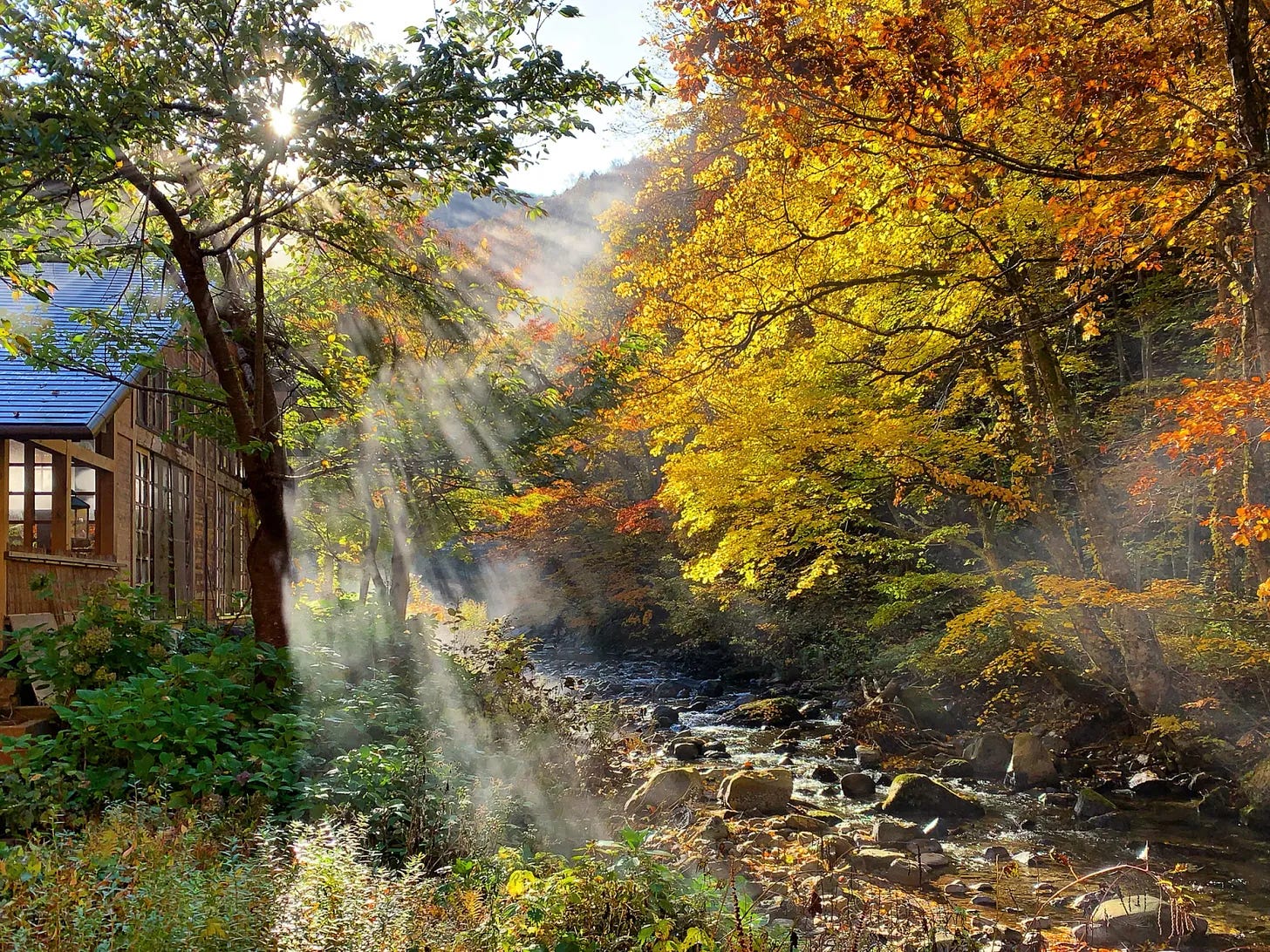
But despite all this seasonal talk, and after last month’s letter, Hiking Japan: From Okinawa to Hokkaido, which covered some scenically rewarding trails across the country before the hiking season begins in late spring, this month’s letter turns to a topic, an activity, an experience, perhaps even the very meaning of life itself (certainly for the Japanese), that is largely independent of the calendar, the seasons, and even the weather: hot springs, in other words, onsen experiences in Japan.
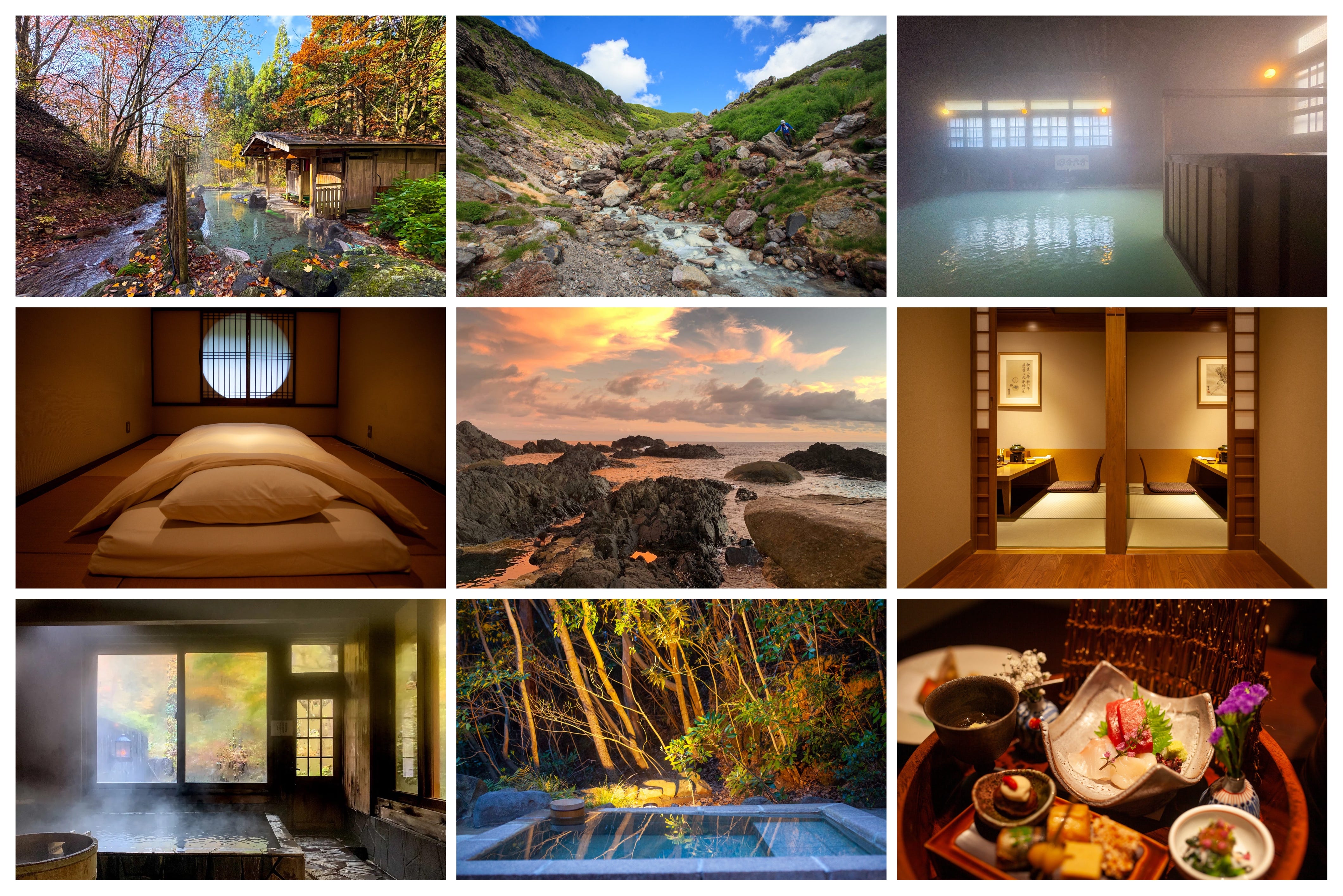
We will begin with a bit of background on Japan`s favorite national activity and then move on to some of my favorite onsen experiences across the country, from wild hot springs and rustic baths to onsen villages and resort-style retreats.
One of the most thrilling aspects of living in Japan has, somewhat ironically, been the mundanity of everyday life and the ritual-driven rhythm that brings a great deal of calm with it. And when it comes to everyday rituals in Japan, few things are more defining than its onsen and sento culture, the latter of which was recently in the spotlight with its striking appearance in Wim Wenders’ Perfect Days.
Before we go any further, it may help to briefly clarify the distinction between the two. Sento refers to public bathhouses served by heated tap water, and it is written using the kanji for “coin” (銭) and “hot water” (湯). These neighborhood baths can be found in abundance across the country, including many here in Tokyo. What separates them from the onsen is not only the source of the water used but also the distinct aesthetic, with tiled bathing halls and large painted murals, most famously of Mount Fuji, behind the baths.
Onsen, the topic of this month’s letter, literally means “hot spring” in Japanese (it uses the kanji for “hot/warm” (温) and “spring/water source” (泉)) and refers to naturally heated spring water that meets criteria set by the country’s Hot Springs Act.1 While some may have aesthetics similar to a sento with painted tiles, the visual atmosphere usually relies more on the surrounding nature than on the interior design. The term onsen is used rather generously in travel writing and may refer to the hot spring itself, a bathing facility, an entire village, or even a simple natural pool filled with hot spring water.
It is difficult to overstate the role of onsen in Japanese culture. Strongly linked to many of its defining aspects, such as omotenashi, the unique form of Japanese hospitality, and ideas of purification rooted in Shinto and Buddhism, references to onsen can be found everywhere in the country, including in literature and even anime, such as Spirited Away, which takes place in a haunted old bathhouse.
Perhaps the most captivating, and for many visitors, a little intimidating element of the onsen experience is the notion of “naked communication” - hadaka no tsukiai - that these facilities gently reinforce.
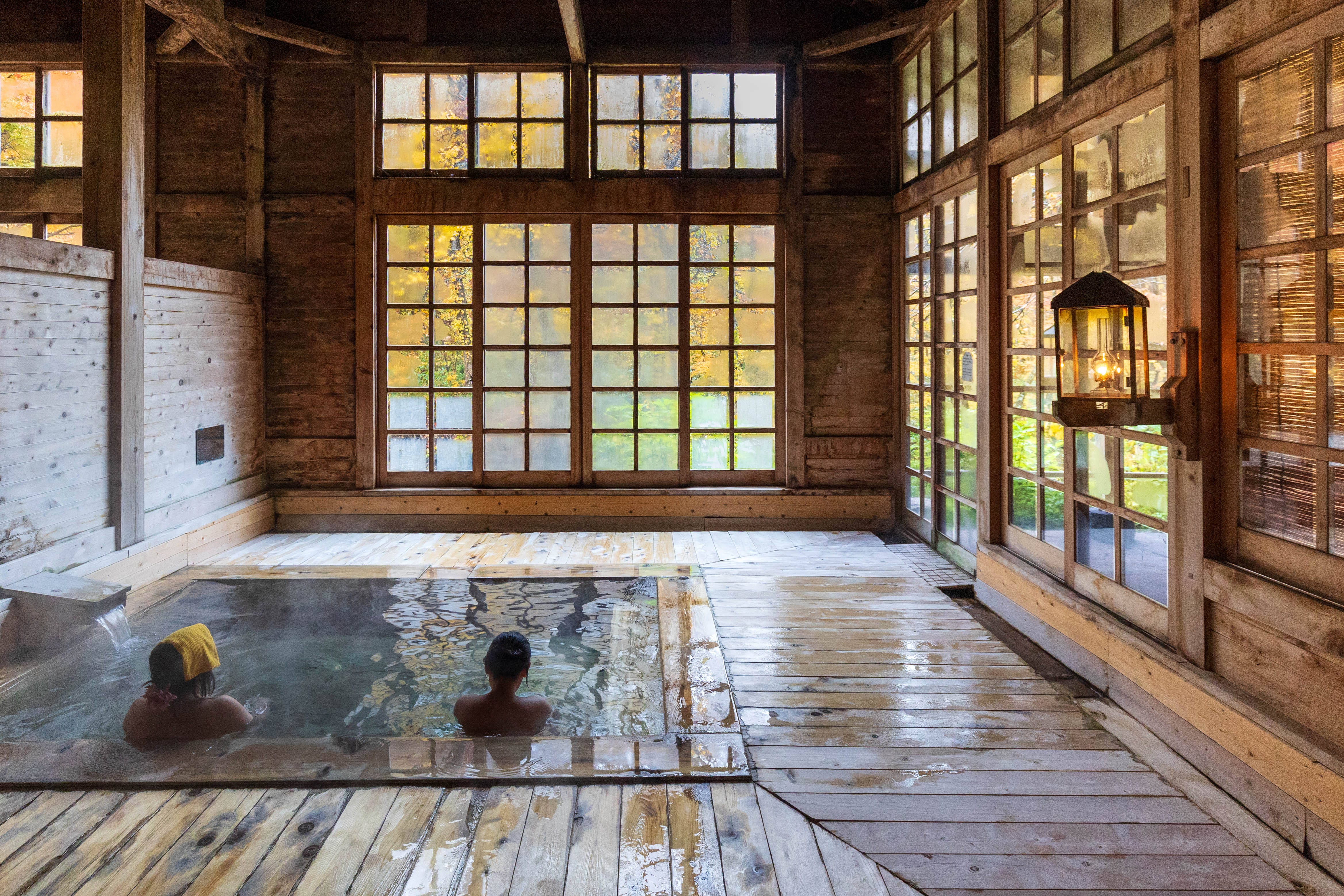
You might have heard that a visit to a Japanese onsen requires one to strip off all clothes (most are gender-segregated, with a few exceptions, more on that below). It can feel a little daunting at first, but not too hard to get used to (speaking from personal experience as a rather shy person).
In addition to hygienic considerations, the concept of naked communication is based on the idea of leaving all signs of social status at the door and sharing the space on equal footing, often leading to more open and meaningful conversations. And I have rarely felt as welcome in this country as during the quiet early morning hours in a rural onsen, where elderly ladies often show nothing but adorable enthusiasm at seeing a foreigner enjoying a part of their culture, even if that foreigner sometimes looks as though she is sitting in fire rather than in hot water2.
Celebrating public baths as communal bonding spaces is, in fact, not entirely unfamiliar to someone from my culture, which has its own hamam - better known globally as the Turkish bath tradition. While the practice differs in the details3 (you are expected to wear a peshtemal in a Turkish bath, the marble interiors are quite magnificent, and a vigorous body scrub is part of the ritual, highly recommended), hamams have also long served as communal spaces of relaxation and socialization, dating back to Byzantine and later Ottoman times, and are now going through quite a revival period with some astonishing renovation work. Yet in my country, the experience is often approached more like a treat, something akin to an occasional day at the spa, rather than a weekly, and for some even daily habit, as it is in Japan.
After all this talk of communal nakedness, in the service of barrierless communication, let’s turn to some specific destinations across the country where you can experience the ritual for yourself.
Situated in one of the most volcanically active zones on earth and home to 111 active volcanoes, Japan’s onsen menu is extensive. With around 27,000 hot spring sources across the country, serving about 3,000 onsen areas, these healing baths, in addition to daily use, also remain one of the leading drivers of domestic tourism.
“Onsen-hopping” trips, covering several hot springs in a single trip, are a beloved concept that has also been lovingly adopted by many of the country’s foreign residents.
Kyushu Island, the “hottest” island in this land of fire, is home to roughly 35% of Japan’s hot springs. But with more than 27,000 sources nationwide, you are rarely far from one wherever you are in Japan, and below are some of my favorites, grouped by category: wild onsen, rustic baths, onsen villages, and resort-style retreats.
Wild wild onsen
Wild onsen - known as notenburo in Japanese - are natural, undeveloped hot springs that you can find in nature areas like riverbeds, mountains, and even oceansides. With minimal infrastructure around those and certainly not a resort-type development, you will often need to hike to reach one.
Among the wild onsen experiences I had in Japan, one of the most visually striking ones was Hirauchi Onsen in Yakushima. Sitting right inside the ocean on the southern coast of the island, the hot water in Hirauchi flows up from under the sea into natural rock pools. Accessible only twice a day, during low tide, the atmosphere becomes particularly gorgeous around sunset. Stargazing at night, listening to the ocean, while the hot water warms your body, is another option that will likely turn you into an onsen maniac immediately.
Moving far up north to Hokkaido and then climbing towards its highest mountain, another wild onsen sits in the middle of one of the most mesmerizing high-altitude valleys in Japan - Susoaidaira Valley in Daisetsuzan National Park.
Requiring substantially more effort to reach than Hirauchi, Nakadake Onsen is a spot accessible only to hikers, which certainly adds to its allure. While you may hesitate to touch the water at first, let alone bathe in it, given its proximity to the infamously poisonous Yudoku Onsen just ten minutes away in the Ohachidaira Caldera, rest assured that the water is perfectly safe. This very small but certainly memorable onsen, about as wild as it gets, serves as a perfect place to rest your legs in the middle of a long day of hiking. A full-body soak is also encouraged, as many hikers seemed happy to do so.
While this last one may not qualify as a “wild onsen” in the strict sense of the term, it is another hiker's only one, and among my favorites for the atmosphere it offers. The small onsen bath of Hokkein Sanso, an all-wooden mountain lodge up in the Kuju Mountains in Kyushu, may not look too special at first, but it certainly feels that way after a day of hiking, offering you the comfort of a warm bath before a good night’s sleep, with another day of hiking to follow.
Onsen villages
Then there are “onsen villages” - the towns blessed with generous hot spring sources, leading to the formation of a cluster of facilities and businesses around them. The term “onsen resort” is also often used to describe these hot-spring-inn dense areas.
In some of these towns, facilities draw their water from the same hot spring source, while in others, as they very much love to tell you, there are multiple sources, giving you the chance to have a different “bathing” experience at each facility. One may offer milky blue waters; another, an iron-rich source; some may come with very clear, lake-like waters, whereas others may have muddy waters on their menu (I always feel like these ones should offer the best health value, given all the trouble).
To be honest, I am always a bit wary of onsen villages, as they can sometimes be a little too developed, dominated by concrete buildings and prioritizing functionality over atmosphere. Some onsen resorts can also feel too old, unfortunately, without the retro charm attached to it, more like a place that felt possibly very modern when first built, but without the sense of timeless design, condemning it to feel outdated very quickly. In those towns, the promise is more about the quality of the onsen water, rather than the atmosphere.
But there are also some that offer an almost perfect visual coherence, and therefore truly feel like they're out of an Edo-period novel, without even a touch of tackiness.
In this category, among the places I've visited so far, Nyuto Onsen village in Akita Prefecture is my favorite. Tucked away in the tree-dense (and bear-filled) mountains of Tohoku, each of the seven facilities enjoys its unique location and, yes, draws its water from a different source. A shuttle bus travels all day between the inns, making it easy to experience multiple baths in a day.
The range of facilities in Nyuto is also quite interesting, including very old, rustic ones - like Tsurunoyu; ones that look anything but appealing from the outside while hiding one of the most picturesque onsen baths in all of Japan inside - like Ganiba, or even more eclectic ones, like Okama converted from an old school building.
Kurokawa Village, on Kyushu Island, is another favorite. While it is a little less well-known than the famous Yufuin, sitting a few hours away by car, Kurokawa is, in my view, the quieter and much more charming one in a rather elegant way. Home to more than twenty onsen ryokan spread across a mountainous area, Kurokawa, with its large outdoor baths, perfectly fits the description of a “relaxing weekend getaway surrounded by nature”, and it is a place I would visit far more often if it were closer to Tokyo.
Another onsen village I visited recently and wrote about in February for the Travel Diaries series is Shibu Onsen in Nagano, known for its nine baths and proximity to the famous snow monkeys, who are also fond of hot springs.
Similar to Nyuto and Kurokawa, Shibu, if you do not let the sight of the first set of buildings that welcome you discourage you (which you never have to see again once you enter the village), is one of the onsen towns where there is a strong aesthetic consistency dominating its streets, allowing you, in that cliché-for-a-reason way, to feel pleasantly removed from the modern world.
The interiors of the individual baths in Shibu can feel a little less exciting than their facades, but the fact that they are accessible only to locals and overnight guests with a special key makes the experience still special.
While Kurokawa and Nyuto stand out as nature retreats, Shibu offers small-town charm, with narrow cobblestone streets and cozy cafés and restaurants scattered throughout.
Historical onsen ryokan
Another type of onsen experience, my favorite kind, is the independent onsen facilities that are not part of an onsen village. These inns are often found in secluded locations and have a historical aura, both in their background and in the nature of their facilities.
But one quick note before we get into the specific facilities: you will often read descriptions rooting the establishment of these types of onsen ryokan to centuries ago - like “established in the 17th century.” But this rather catchy date reference is often used to indicate the discovery of the hot spring source in that area rather than the establishment date of the specific inn. So you will, in most cases, not be staying in a centuries-old building, though the experience can sometimes feel like you are.
Tohoku is one region where you can count on finding some of the best independent onsen experiences across the country. Aomori alone, the region's northernmost prefecture, hosts several of the country's most beloved historical facilities. And this year, I had a chance to experience three of them in a single trip when I went on an onsen-hopping trip to Tohoku.
These included the undeservedly (exaggerating, of course) scandalous Sukayu Onsen - with its large mixed-gender pool - konyoku in Japanese - Yachi Onsen, which felt like staying in a welcoming family home, along with Aoni Onsen - frequently featured in this newsletter, before heading down to Akita, for a one-night stay in Nyuto Onsen. You can read more about each one of these facilities in this post: Tohoku Onsen Hopping: Four Nights, Four Different Onsen.
Modern facilities
In addition to nature-dominated, simple yet atmospheric onsen experiences at understated facilities, there are also plenty of more comfortable, modern options across Japan.4
KAI is the onsen sub-brand of Hoshino Resort Group, which does a fairly good job offering upscale facilities, with a fairly convincing local touch. I had stayed in several of their resorts as part of writing & photography assignments, and KAI Kirishima, located in the lovely Kagoshima Prefecture and overlooking the mighty Sakurajima, an active volcano sitting in the ocean, was among my favorites. I was put up in a room with its own onsen balcony, making me wish I could stay for an extra night after the assignment.
Another comfortable yet unique facility I got to stay in was Gosoku no Kutsu on Amakusa Island in Kyushu, where each one of the fifteen villas has its own large rotenburo (outdoor bath). Dinner and breakfast are served in private rooms detached from the villas. The hosts are very friendly, and the island is also a very worthy destination, with its captivating history as the site of one of the largest public rebellions in Japan, and a refuge for the Hidden Christians of Japan, as well as its geological features and outdoor beauty.
Tohoku, in addition to its many rustic inns, also has many upscale, modern ryokan or resort-type facilities. Among the ones I stayed in, Yukemuri no Yado Izumi Onsen in Akita, a little hard to get to but well worth the trip, is the one that I remember most fondly. It had stylish, very comfortable rooms, even more atmospheric dining areas, and wooden onsen baths overlooking the forest, as well as a private one in each room.
So, this wraps up this month’s letter, hopefully offering a few ideas if you are looking to add an onsen experience to your travels in Japan. There will be one more post in late March in the Travel Diaries series about the Nakahechi Route of the Kumano Kodo, which I will re-hike with two friends next week.
As always, thank you for being here.
Until next time,
Burcu
P.S. In addition to the monthly letters, below is a quick recap of the extra itinerary and planning-focused posts available on the newsletter for monthly and annual subscribers. You can access each one here on Substack or on a single page on my website.
Shibu Onsen and the Snow Monkeys of Nagano (February 2026)
One Fine Autumn Day in Tokyo (December 2025)
Tohoku Onsen Hopping: Four Nights, Four Hot Springs (November 2025)
Tokyo Eateries: the Non-Gourmet Version (October 2025)
Autumn Colors Trip to Aomori: Itinerary Suggestion (August 2025)
One Fine Day in Kanazawa (July 2025)
Cycling the Shimanami Kaido in Two Days (June 2025)
Japan Trip Planning Q&A Series (three posts) (February - April 2025)
Winter Trip to Biei in Hokkaido (four posts) (January 2025)
Hiking the Kyoto Trail (five posts) (November 2024)
One Fine Autumn Day in Kyoto (September 2024)
Walking Goto Islands (eight posts) (March 2024)
“The term “hot spring” as used in this Act refers to hot water, mineral water, water vapor, and other gases gushing out from underground (excluding natural gas whose primary component is hydrocarbons), that have a temperature or substances listed in the appended table.”
In my defense, some onsen temperatures can reach 50°C, though the low-40s are more common.
I used this comparison often when asked whether I had gotten used to onsen culture in Japan, only to realize later - horrifyingly - that the Japanese are already quite familiar with the term “Turkish bath,” though not in the sense I explain here and for rather less innocent reasons. As I understand it, the term is no longer used to refer to what it means in Japan and has been replaced with “soapland” after the protests by Turks, at a time when we obviously had the energy to protest less consequential matters.
I stayed at the facilities mentioned in this section - modern facilities - while working on paid writing and photography assignments for regional tourism offices. Those pieces were published several years ago already, and I include the places here only because I genuinely enjoyed my stays and wanted to share them as additional options. There is no sponsorship attached to this newsletter, other than the direct paid subscription options.


Reading your writing is comfort food for my soul.
Such beautiful words and photos. Makes me want to go back to Japan asap!